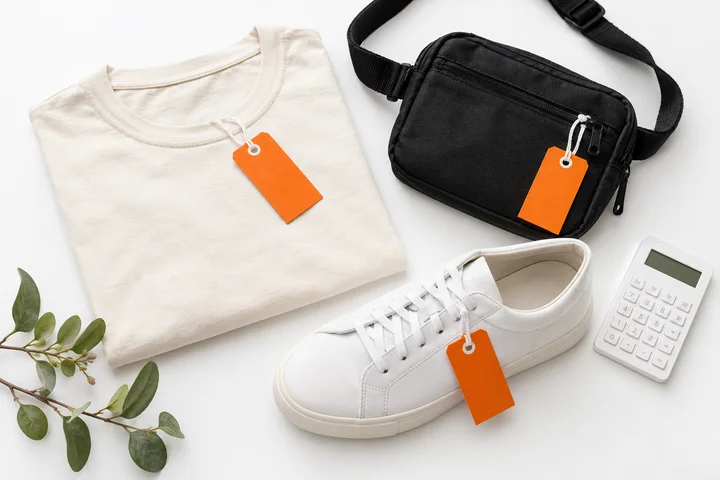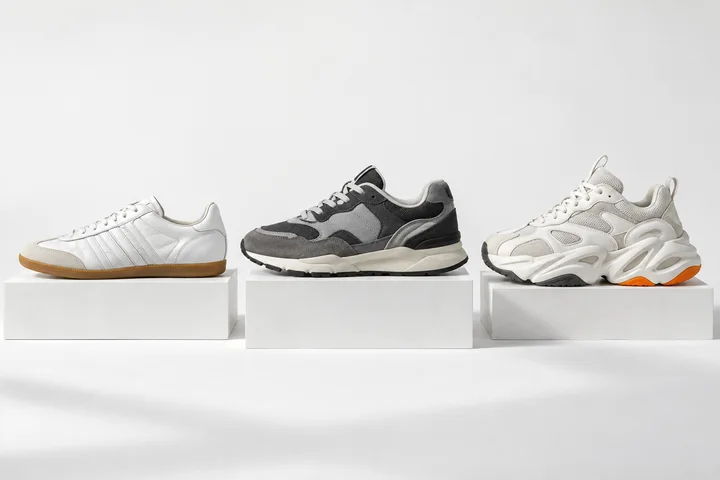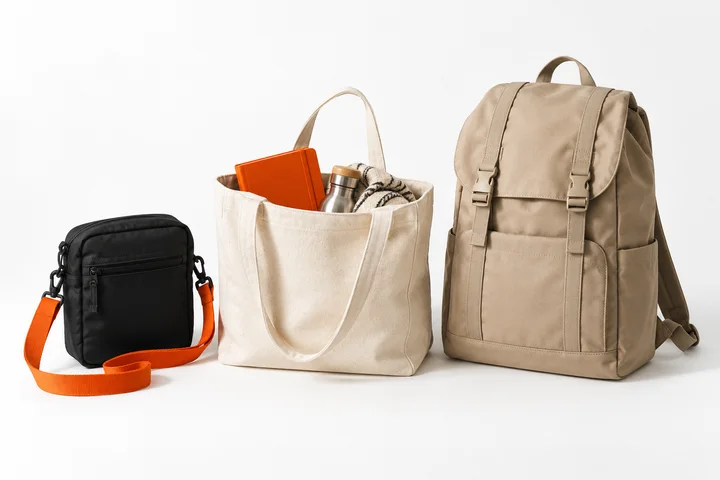
Repeat the useful pieces and change their relationships: which colour is visible, where the hems finish and how the trouser line meets the shoes.
Pull five pieces from your wardrobe
Use a grey hoodie, a dark everyday jacket, a white tee, straight blue jeans and dark trousers. Add shoes and a bag you already use. These are illustrative combinations, so substitute an equivalent piece rather than buying a matching list.
The restricted palette makes the exercise easier to see. Grey sits between the light tee and dark jacket; the two trouser options change the lower half without requiring another top. If your wardrobe uses navy or brown instead of black, keep that colour as the dark anchor throughout.
Lay out the pieces together before making the first outfit. A short jacket and a long hoodie will create a visible lower layer. A longer jacket may frame or conceal that same hem. Work with the relationship you have instead of assuming the garments must end at the same point.
Look one: grey and blue, with the hoodie leading
Start with the grey hoodie and blue jeans. Keep the jacket off for the initial styling comparison so you can see the hoodie as the main shape. Choose familiar neutral shoes and leave the bag simple.
Decide whether you like a small amount of white tee showing below the hoodie. A narrow visible strip separates the top from the jeans; a much longer tee becomes another substantial layer. Compare the two in a full-length view rather than deciding from a close-up of the neckline.
This is the simplest look in the set. It gives you a baseline for judging whether the jacket adds a useful outline in the next version, instead of treating every available layer as compulsory.
Look two: the jacket frames the same base
Keep the hoodie and jeans, then add the dark jacket. Try it open first. The grey centre can remain visible from the neckline downward while the jacket supplies a darker frame around it.
Look at the hood and the jacket collar together. If the area feels crowded, settle the hood naturally over the collar and remove a bulky scarf from the styling experiment. If the jacket has a strong graphic or a contrasting panel, leave the other accessories quieter.
The important change is the new outer outline. A shorter jacket can emphasize the hoodie hem; a longer one gives a more continuous dark side. Choose the arrangement you want to repeat, rather than following a fixed requirement that one layer must always be longer.
Look three: a light centre and a darker lower half
Use the white tee, dark jacket and dark trousers. The hoodie sits this version out. The white centre becomes a clearer contrast against the jacket, while the dark trousers connect the upper and lower parts of the look.
Compare a straight trouser shape with the blue jeans from the first two versions. A small change in leg width or the break above the shoe can make the same jacket feel different. Keep the shoes fixed while making that comparison so you can see what the trousers contribute.
This version is a visual alternative for occasions and conditions where those particular pieces are suitable. It is not a claim that a tee and jacket provide the same warmth as the layered versions.
| Look | Pieces from the five-item set | Main visual change |
|---|---|---|
| Hoodie leads | Grey hoodie, blue jeans, optional white tee | A simple grey-and-blue outline |
| Framed layers | Dark jacket, grey hoodie, blue jeans | A dark outer frame around the grey centre |
| Light centre | Dark jacket, white tee, dark trousers | Stronger light-dark contrast and a different lower line |
Let the outfit reveal the actual gap
Try all three with your existing clothes before adding another item. If the same jacket works across the set, another similar jacket may contribute less than trousers with a different shape. If you never choose the hoodie-led version, a second hoodie may not be the most useful addition.
These are ideas for colour and proportion, not tested weather-protection recommendations. Our hoodie edit and jacket edit provide discovery options if the exercise reveals a gap. For garment measurements, use the dedicated fit guide.